A dark, moody true-crime narrative site with an unusual “Mercari-style true crime listings” concept

METAMORPHOSES OF BODIES INTO SIGNALS, reframes Ovid’s transformation myth as a contemporary system in which identity, politics, grief, desire, and truth are flattened into circulation and engagement.
The overall effect is meant to feel less like political satire than prophetic infrastructure: a civilization observing its own conversion into media ecology.

The name does all the heavy lifting.
Oblivia: oblivious.
Appropria: she appropriates.
Together they name a particular contemporary figure with surgical precision — the wealthy, well-intentioned Western woman who moves through the world armed with the correct politics, the right reading list, and an unshakable belief in her own perception. She arrives sincerely. She listens deeply. She leaves having taken something.
This is not a satire of villains. Oblivia means well. That is the entire point.
In each story, she travels to a site of real consequence — a contested dam project in the Rift Valley, a corporate wellness retreat built over a compromised cenote, a rewilding scheme, a grief ritual. In each, she “solves” the mystery. And in each, her solution is elegant, photogenic, and fundamentally wrong. The actual cost is borne by those who will never appear in her author photo.
Accompanying her is Alexandrei Harris, the respected environmental journalist whose dispatches lend institutional weight to what she believes she has witnessed. Between Oblivia’s intuitive certainty and Alexandrei’s polished prose, a closed circuit of knowing is formed — one that feels authoritative precisely because it is self-reinforcing.
Beneath them both are the people who actually live there. They explain the situation clearly from the beginning. They are rarely heard, almost never credited, and never allowed to complicate the story Oblivia needs to tell.

What does it mean to heal in a language designed to contain you?
Container Metaphors is a searing, genre-defiant exploration of how systems—bureaucratic, linguistic, architectural, and political—organize the unspeakable. Blending lyrical prose, archival poetics, critical theory, and speculative allegory, Victoria Mansberger Schoen dissects the frameworks used to manage trauma, enforce compliance, and narrate closure. Each section moves through a different register of violence and resistance: from the precision of a field autopsy on anti-woke policy, to the affective erosion of grief in a resolution system designed for silence, to a classroom encounter with the void that reveals the social limits of permitted insight.
This is not a book of metaphors. It is a record of their labor.
Through myth, procedure, and rupture, Container Metaphors asks: What is left of truth when language becomes architecture? What survives when memory is declared non-compliant? And how do we speak—clearly, dangerously, tenderly—when even breath is suspect?
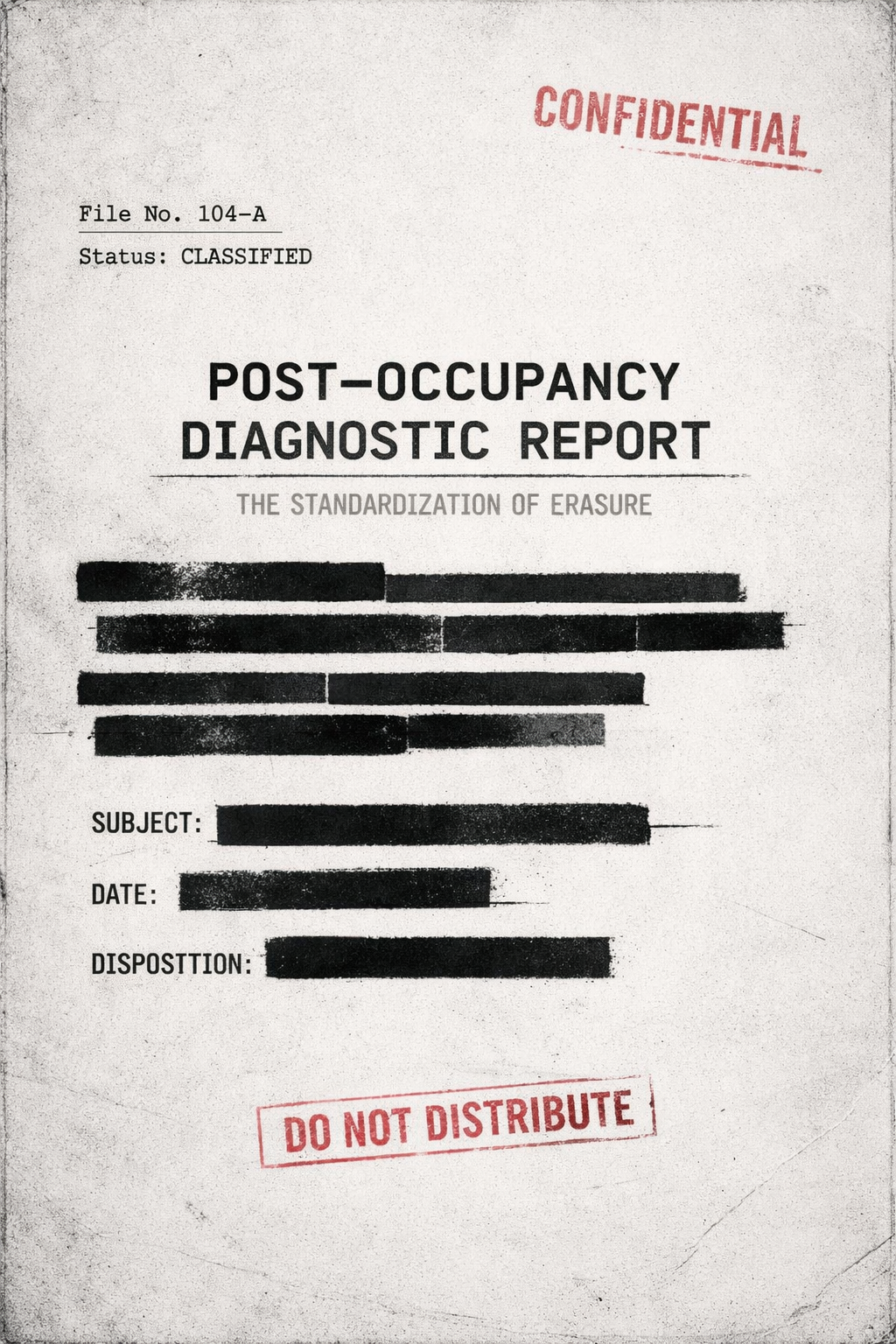
Post-Occupancy Diagnostic Report is a forensic framework disguised as a technical manual. It reimagines personal life not as memoir, but as data—structured through the language of systems engineering, corporate compliance, and clinical bureaucracy. The work documents the psychological, emotional, and spatial consequences of total media and institutional saturation, reframing human behaviors and breakdowns as performance deviations within an optimized environment. Using terminology drawn from diagnostics, architecture, and interface culture, the report audits the self as a failing system living in a post-authentic reality.
The book is divided into themed sections (Broadcast, Institutional, Domestic, End-of-Life, and Post-Human Diagnostics), each filled with standardized terms and field definitions. These are presented with chilling precision and emotional detachment, simulating the language of user manuals, tech audits, or military readiness reports. Despite its tone, it contains a quietly devastating emotional core: the disappearance of interior life under the pressures of optimization, surveillance, and scripted normalcy. It doesn’t tell a story; it documents the erasure of story.
This isn’t autofiction—it’s infrastructure poetry. It positions language itself as a containment strategy and suggests that survival under contemporary conditions requires learning to speak in forms that outlive feeling. Through its very form, the book argues that emotional expression must now pass through diagnostic layers, producing a new genre entirely: the post-authentic technical elegy.
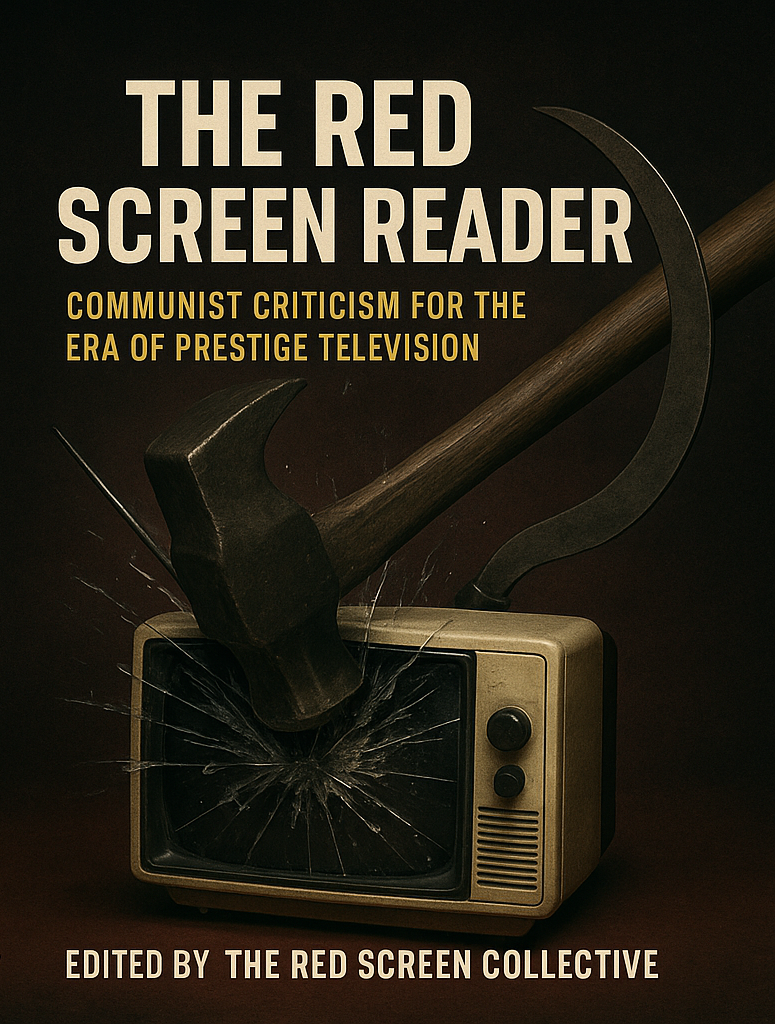
Communist television criticism has existed quietly for almost a century. Not as a discipline, but as an insurgency. Its earliest voices were censored, discredited, or disappeared. Some were fired. Others exiled. A few buried in academic subfields deemed less threatening: folklore,linguistics, children’s programming. Graduate students learned to speak in code. Material culture. Visual rhetoric. Post-industrial narrative forms. Whole subfields vanished when donors rewrote their missions.
This is not conspiracy. It is bureaucratic memory loss, practiced and perfected. What we call the field today barely survived. Not because it was preserved, but because it was remembered. Not because it was welcomed, but because it refused to vanish.
The contributors to this volume are what is left of that refusal. They do not agree on everything. They do not need to. They fight. Often, sharply. Because they know what critique costs. They know that theory is not an abstraction. It is a tool. A target.
A way to name what the world punishes you for seeing.
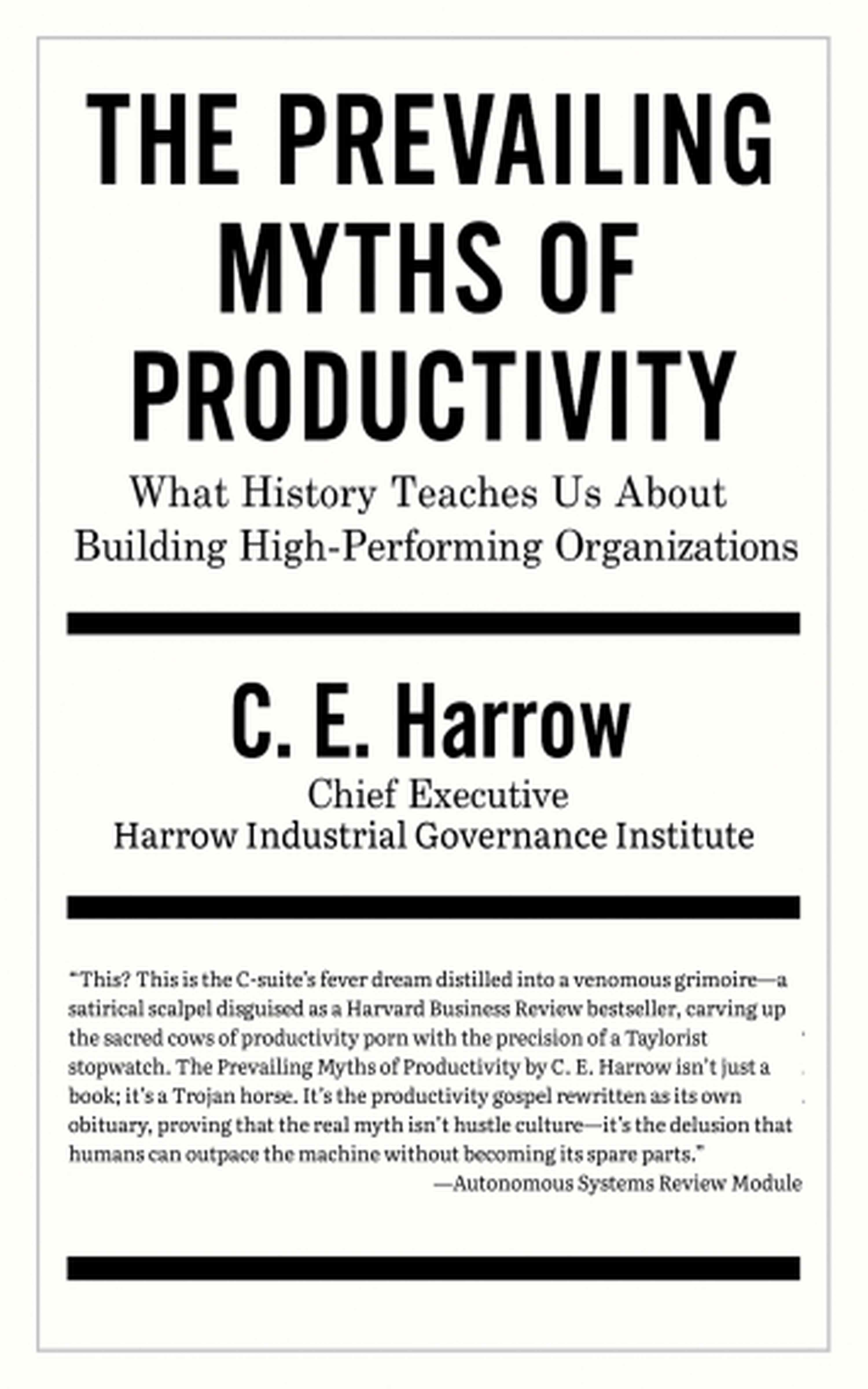
CE Harrow’s book, The Prevailing Myths of Productivity: What History Teaches Us About Building High-Performing Organizations exposes how contemporary American corporations shape identity, manage emotion, extract labor, and call the entire process “professionalism.”
Written for executives by an executive as a guide to mastering productivity, it includes Harrow’s full leaked white paper archive, diagrams, definitions, and the internal policies that draw back the C-Suite curtain and reveal the lasting worldview behind contemporary management culture.